
Salem Deed Records and Instrument Types
Virginia circuit-court clerks keep land records under Va. Code §17.1-294 and related provisions. In Salem, the clerk records far more than sale deeds. One instrument transfers title. Another secures a loan, releases an earlier claim, or describes an easement. Still others record court or fiduciary actions affecting land. The record type tells you which legal event occurred. The parties, date, legal description, and book/page or instrument number then tie that event to the parcel.
| Instrument | What the record does | Why a Salem researcher may see it |
|---|---|---|
| General or special warranty deed | Conveys the described interest with the warranties stated in the instrument. | Sale or other transfer; read the deed’s exact terms. |
| Quitclaim or gift deed | Conveys whatever interest the grantor holds, if any, without a full title guarantee. | Family transfer, interest cleanup, or gift. |
| Trustee or fiduciary deed | Shows a transfer by a trustee, executor, or administrator acting in that role. | Trust, estate, foreclosure, or court-authorized transfer. |
| Deed of trust and release | Creates a secured interest, then records a later satisfaction or release. | Loan financing and proof that a recorded security instrument was released. |
| Easement, plat, or correction deed | Defines use rights, lot layout, or a correction to an earlier record. | Access, utilities, subdivision, or a description that changed. |
A deed and a deed of trust do different jobs. The deed conveys the interest it names. The deed of trust records security for a debt. A later release or satisfaction should be matched to its original instrument. The classes described here cover the common Salem record types. They do not match a specific portal menu.
Salem Land-Book References Lead Back to Deeds
The Salem land book can turn a parcel search into a clerk-index search. Its 2026 entries may list a map number and legal description. They may also show the owner and mailing address, land and improvement values, total value, and a deed reference. A reference like 060003912 is a useful clue. Preserve it exactly. No universal conversion exists between every land-book reference and the live SRA search field. Keep the number with the parcel ID and description. If it returns nothing, ask the clerk how that reference is indexed.
A matching tax-roll row narrows the field. The deed itself still does the heavy lifting. It states the grantor, grantee, conveyed interest, legal description, and any listed exceptions. The parcel may have been split or combined. Do not assume the current map ID appears on the older deed. Compare the lot description and the transfer chain before deciding an instrument belongs to the address.
Virginia SRA Access to Salem Deeds
The Virginia Secure Remote Access system is the online entry point for land records. Circuit-court clerks keep those records. The statewide SRA explanation separates a free index view from images limited to subscribers the clerk authorizes. A local clerk enables the free index view. Salem's official pages state neither the earliest online year nor the image subscription fee. Confirm current Salem access terms with the local clerk before relying on an image link.
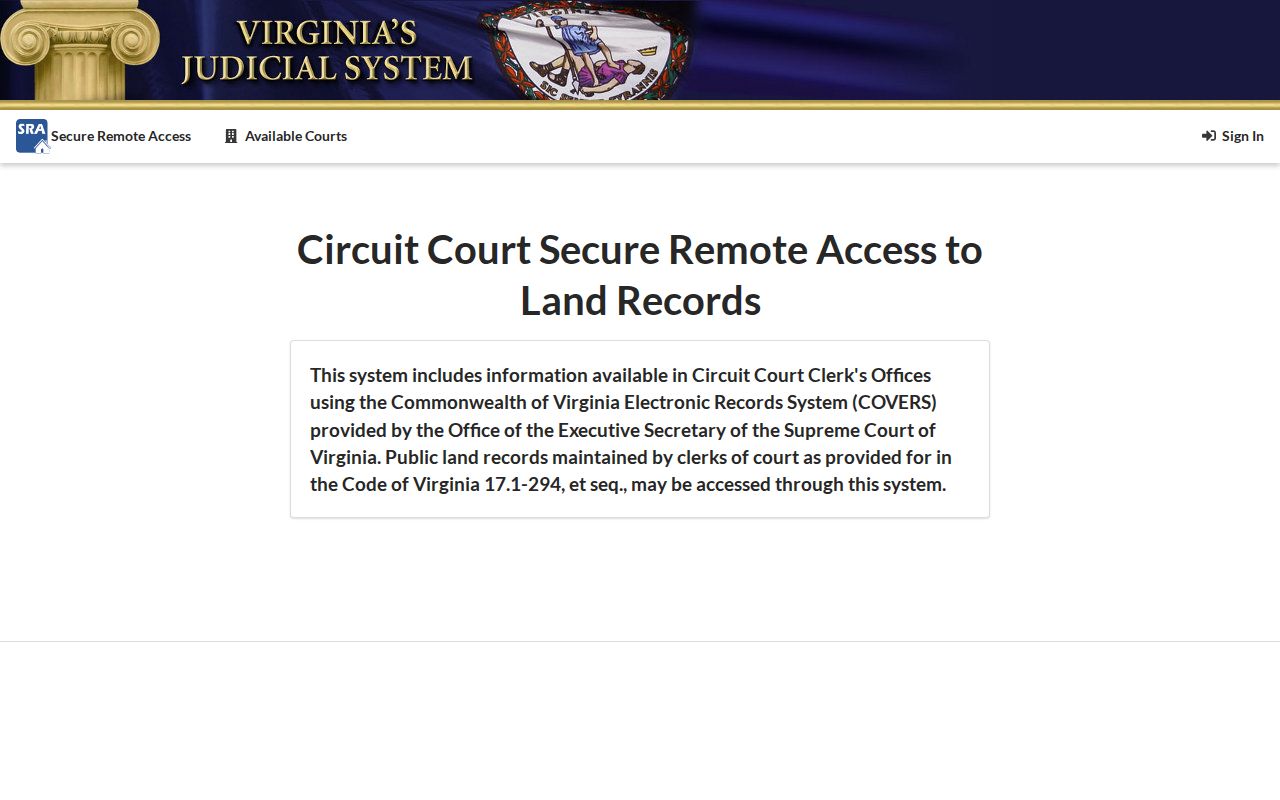
The SRA land-record entry page is a search route rather than a deed result. An index entry is not the instrument itself. Save the reference the official index shows. Ask the clerk for the image or a certified copy when the document matters. Review Virginia's SRA access explanation before treating an index result as a document copy.
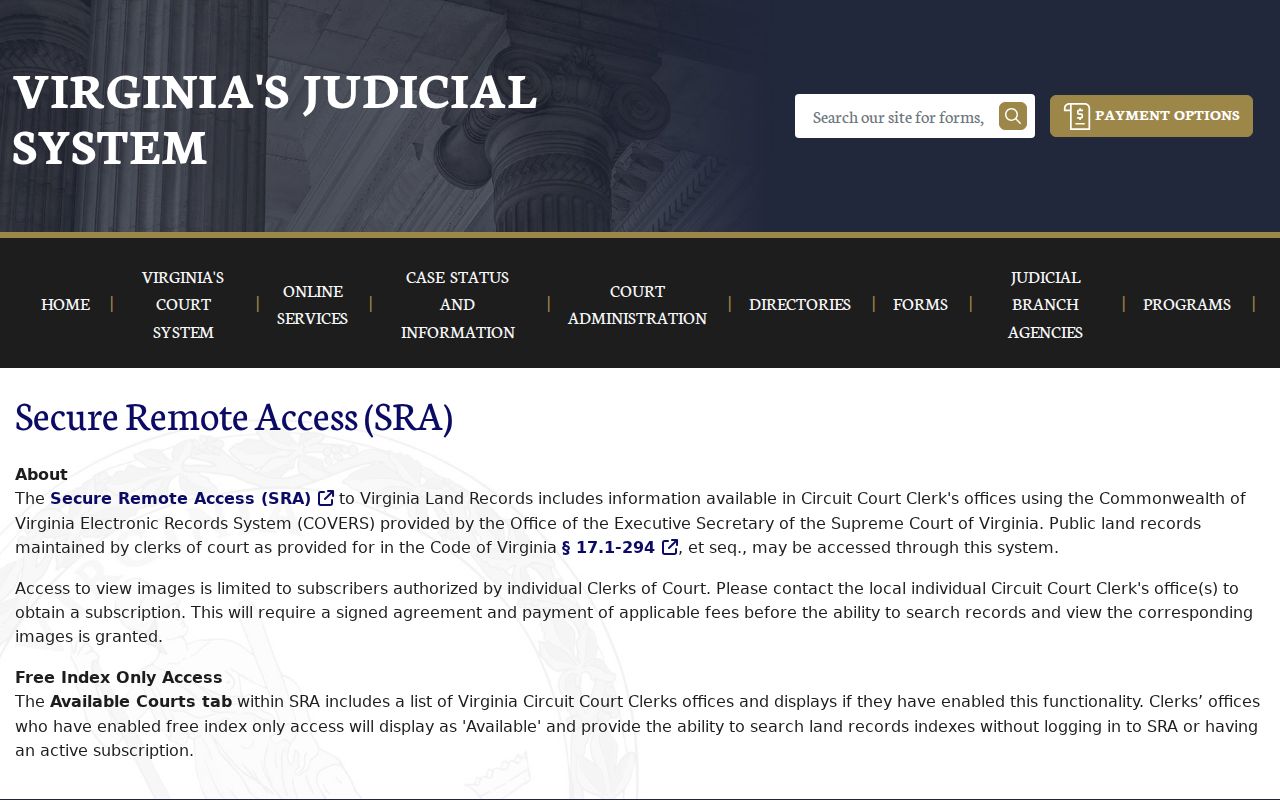
The index and the image are separate layers. A readable party entry can still point to a deed behind a subscription, clerk visit, or copy request. See how free index access differs from subscriber images in the statewide SRA guidance.
For a Salem instrument, follow the clerk's directions. Never assume every indexed deed opens at no charge.
Reading Salem’s Grantor-Grantee Index
A grantor conveys an interest. A grantee receives it. A Salem deed search runs on those names and the recording details. It does not run on a street address. Search the current owner as grantee to find the deed into that owner. Then read the grantor and legal description from the instrument itself. The grantor-grantee index is the legal-record path for the transfer. DataScout and the land book help identify the parcel and a likely reference. Neither replaces the deed.
The local index screen offers its own field labels. Virginia SRA leaves availability to each clerk. So carry the party names, date range, and deed reference and test them wherever the Salem screen allows.
| Search information | How it helps | Salem verification status |
|---|---|---|
| Grantor or grantee name | Finds the parties in the transfer chain. | Core grantor-grantee method; live Salem field label not captured. |
| Document type and date range | Narrows deeds, releases, assignments, or other filings. | Exact menu and date controls not confirmed. |
| Book/page or instrument number | Locates a known clerk reference and supports a copy request. | Expected reference types; live result was not rendered. |
| Legal description or parcel clue | Helps distinguish same-name owners and nearby lots. | Use the land-book description; exact SRA search behavior is not confirmed. |
- Start with the current tax-roll owner or the deed reference in the land book.
- Search that party as grantee and compare the legal description, parcel clue, and date.
- Record the grantor, grantee, document type, date, book/page or instrument number, and prior deed reference.
- For a prior transfer, search the grantor from the first deed as the next grantee.
- Grantor
- The person or entity that conveys the interest named in a deed.
- Grantee
- The person or entity that receives the described interest.
- Chain of title
- The ordered record of transfers and other instruments that affect an interest in land.
- Book/page or instrument number
- A clerk reference used to retrieve a filing; preserve the format printed on the source.
Requesting a Salem Deed Copy
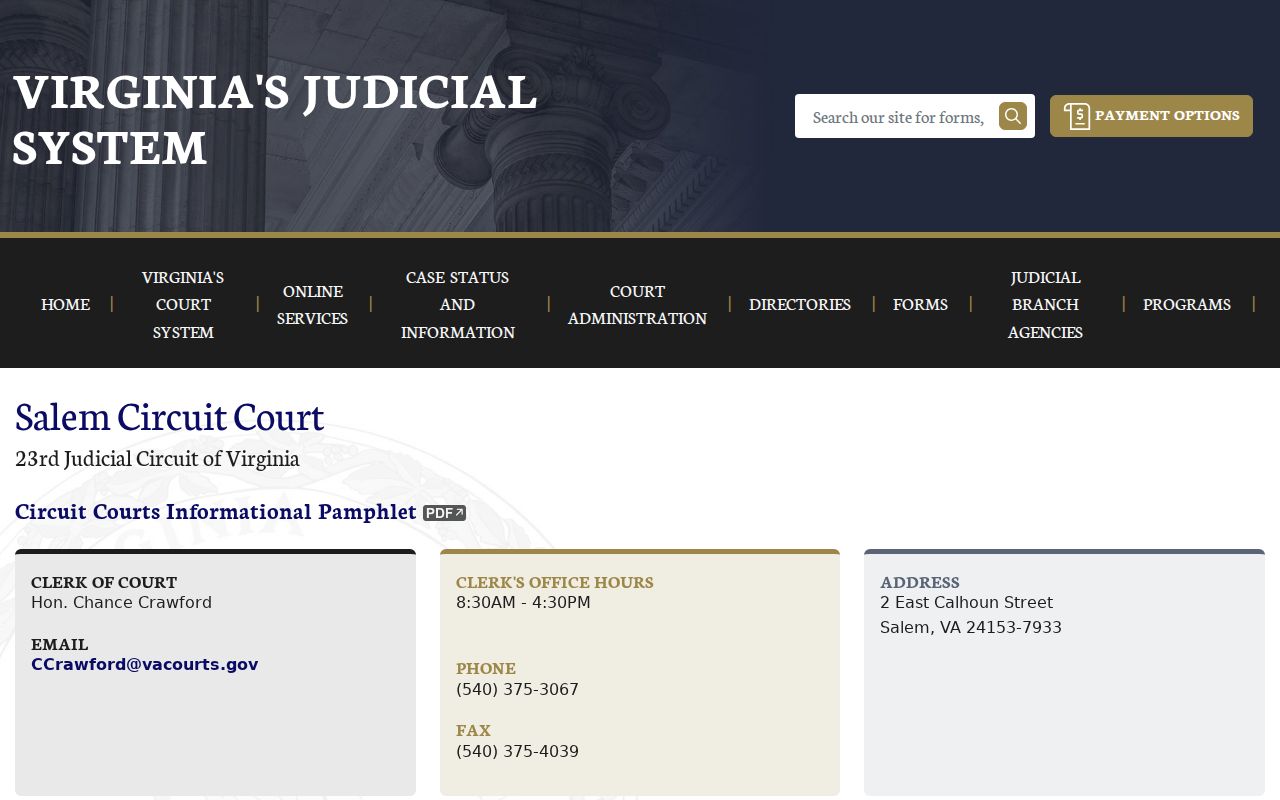
The Salem Circuit Court clerk keeps the recorded land instruments for the city. That includes deeds, deeds of trust, releases, easements, and plats. The court lists the clerk at 2 East Calhoun Street, Salem, VA 24153, with phone 540-375-3067 and counter hours of 8:30 a.m. to 4:30 p.m. No per-page or certification fee appears on the clerk’s page, so call ahead before you visit. Ask about current image access, public-terminal steps, copy prices, and whether the volume you need is onsite or in storage.
Have your details ready when you contact the clerk. Bring the grantor and grantee names, the parcel number, the legal description, an approximate recording date, and any book/page or instrument number you have. A precise reference speeds up the deed search and helps avoid pulling records for a similarly named party. When an online image sits behind a subscription, ask the clerk how to order a plain or certified copy instead. Remember that a copy shows what one instrument recorded; it does not prove the property is free of other claims.
Check Salem Circuit Court clerk contact information before traveling.
For older transfers, ask the clerk whether the deed-book or index volume is onsite, archived, on microfilm, or searchable at a public terminal. The earliest year in the online Salem index is not published. Do not assume it reaches the start of the local record series.
Recorded, not guaranteed. Salem deed records show filed instruments, not a title opinion. A complete title review must account for the relevant deeds, liens, releases, estate transfers, and legal descriptions; consult a title professional or attorney before relying on a chain as clear title.
Older Salem Deed Records Need Context
Local history explains why older Salem deed records carry unfamiliar names. Salem was founded in 1802 and became Roanoke County's seat in 1838. On December 31, 1967, it became an independent city. A deed recorded before that switch may say Town of Salem or Roanoke County. The parcel may now sit inside Salem. Search both the party names and the locality wording. Then use the modern tax ID and boundary layer to confirm the older description covers the same land.
Online deed records run out eventually. Salem Public Library resources add context rather than title proof. Ancestry Library Edition holds land and court collections. Digital Sanborn Maps show historical built form. HeritageHub and local newspaper collections offer notices and obituaries. The library publishes no exact directory year runs. Use a directory or Sanborn map to orient a street and occupant. Then return to the clerk's deed book for the instrument itself.
A Salem Court File and a Deed Are Different Records
The Salem Circuit Court Clerk keeps deeds and deeds of trust as land records. The same court also holds judgments, wills, and probate files. A court case search can surface a proceeding that explains an estate transfer or a dispute. But a docket is not the deed index. It does not show what interest was actually conveyed. Virginia's statewide case-information hub offers no single circuit-court search. So Salem court records require the local route.
Review Virginia's case-information search options to see which records are searchable online. Then ask the Salem Clerk about a specific local file. For a property transfer, always return to the recorded deed. Compare the court action against the instrument date, grantor, grantee, and legal description. That discipline keeps a case mention from being mistaken for a change in title.
Salem Plats May Be Filed Apart from a Deed
A subdivision plat can explain the lot number and layout a deed references. But it is a related land record, not a substitute for the conveyance. Salem's city plat collection reaches back to incorporation in 1968. It uses an "S" book-and-page series. A citation may read S2 33. Older instruments instead describe an addition, a land company, or raw acreage. Search the subdivision name and plat reference. Then compare the platted lot with the deed's legal description and the current tax-map ID.
Labels such as Yorkshire Court, Orchard Court, Forest Lawns Annex #3, and Yeakel Plat appear in local descriptions. They help identify source records. They set no current neighborhood boundary or surveyed lot line. To see how the map and plat work together, continue to the Salem parcel-map guide.